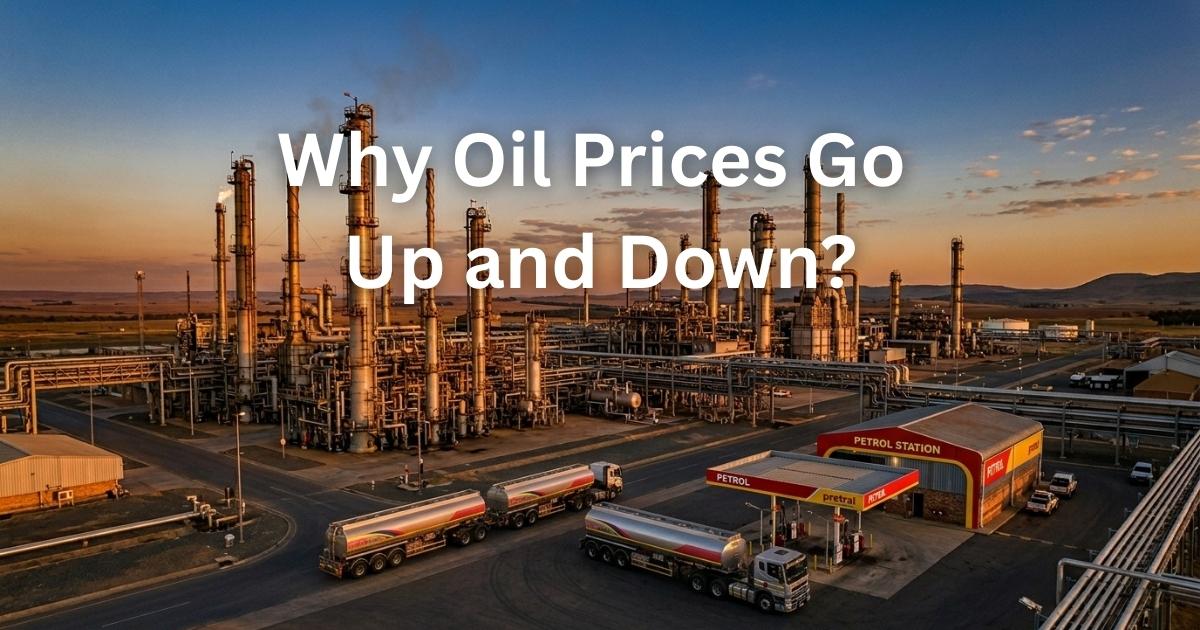
Why Gas Prices Are Draining Your Wallet (And What to Do)
Gas prices drain household budgets more than most people realise. This guide explains exactly why gas prices are so high — from crude oil and refining costs to taxes and geopolitics — and gives you practical strategies to spend less at the pump every single week.
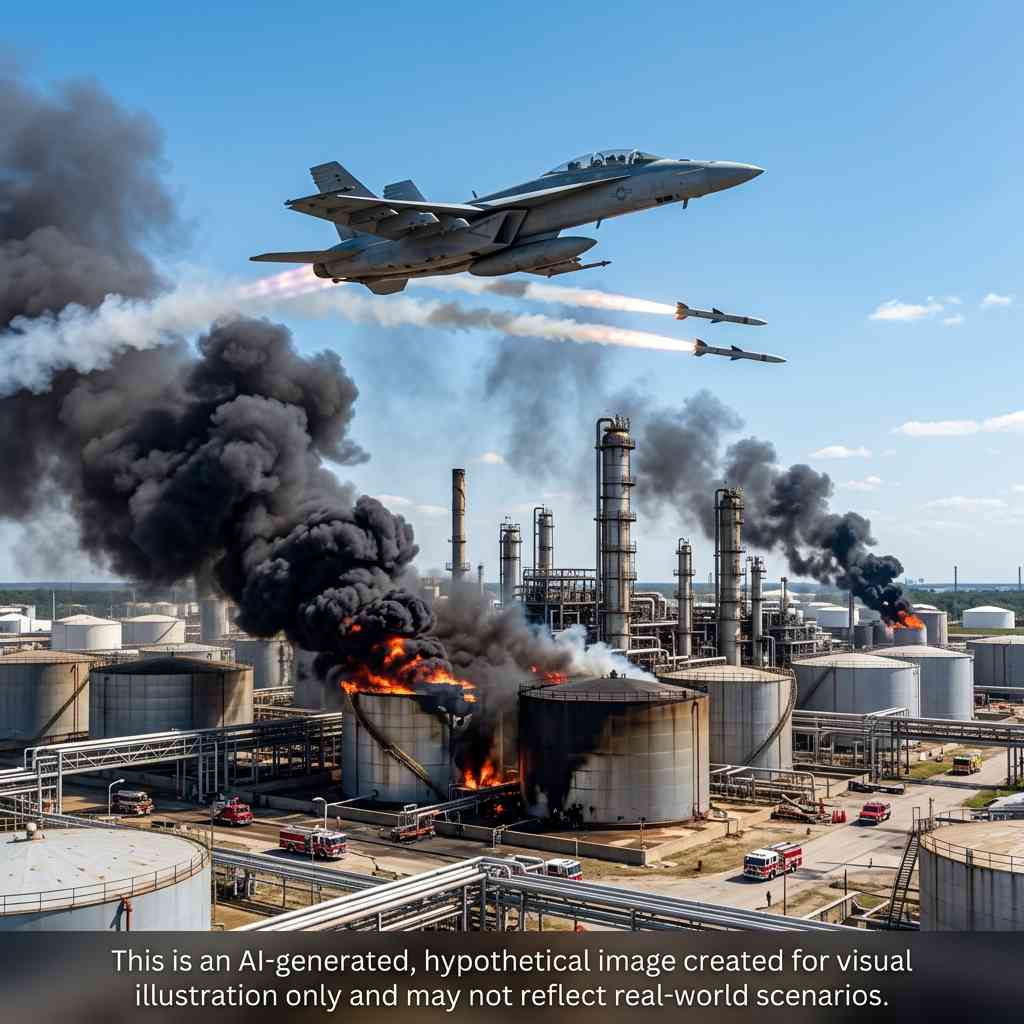
You pull up to the pump and wince. Again.
The number ticking upward feels personal — like something is happening to you that nobody ever explains properly.
Here is everything you need to know about why gas prices behave the way they do, and how to take back some control.
Gas prices are determined by a chain of costs including crude oil, refining, distribution, taxes, and local market conditions — each one adding to the final price you see at the pump.
For most households, fuel is one of the top three monthly expenses alongside rent and groceries. Yet very few people understand what they are actually paying for. When prices spike, politicians point fingers, oil companies cite global forces, and you are left confused at the forecourt.
Gas prices are not random. They follow a logic — a layered cost structure that starts thousands of kilometres away in an oil field and ends at the nozzle in your hand. Understanding that structure will not make fuel cheaper overnight, but it will help you make smarter decisions about when and how to fill up.
In this article, you will learn what drives gas prices at every stage of the supply chain, why prices vary so dramatically by country and region, how government policy shapes what you pay, and which practical strategies can reduce your fuel spend today.
Key Takeaways
Crude oil accounts for roughly 50–60% of the pump price in most countries, making it the single biggest driver of what you pay.
Refining, distribution, and retail margins together add another 20–30% to the final cost.
Taxes make up anywhere from 10% (United States) to over 60% (United Kingdom, Germany) of pump prices depending on where you live.
OPEC+ production decisions, geopolitical tensions, and the US dollar exchange rate all influence global crude oil prices, which cascade into pump prices within days.
Simple behavioural changes — timing your fill-up, reducing idling, and comparing station prices — can cut your annual fuel bill by 10–20%.
Electric vehicles and fuel-efficient driving habits offer the most powerful long-term protection against gas price volatility.
Contents
What You Are Actually Paying For: The Price Breakdown
The Role of Crude Oil in Gas Prices
How Refining, Distribution, and Retail Costs Add Up
Taxes: The Hidden Portion of Every Fill-Up
Why Gas Prices Vary by Country — and by City
What Causes Gas Price Spikes?
How Much Is This Costing You Every Year?
Practical Ways to Reduce Your Fuel Bill
Frequently Asked Questions
Conclusion
Sources
What You Are Actually Paying For: The Price Breakdown
When you hand over money at the pump, you are not just paying for fuel. You are paying for a global supply chain that started months ago on a drilling rig, passed through pipelines and refineries, crossed oceans on tankers, and arrived at your local station via a distribution network spanning thousands of kilometres.
That journey has a cost at every step. According to the U.S. Energy Information Administration (EIA), the typical breakdown of a US gallon of regular gasoline looks like this:
Crude oil: approximately 55–60% of the pump price
Refining costs and profits: approximately 14–18%
Distribution and marketing: approximately 5–8%
Taxes (federal + state): approximately 15–20%
Each of these components moves independently. Crude oil can fall while refinery margins expand, keeping pump prices stubbornly high. Taxes stay fixed while crude swings wildly. This is why the relationship between oil prices and pump prices is never perfectly linear — and why blaming only one factor is always an oversimplification.
The Role of Crude Oil in Gas Prices
Crude oil is the raw material that petrol is made from. It is extracted from underground reservoirs, shipped across the world, and sold on global commodity markets where its price changes every second of every trading day.
The price of crude is denominated in US dollars and benchmarked against two main grades: Brent Crude (North Sea) and WTI (West Texas Intermediate). When either moves, the signal ripples through every refinery and petrol station on the planet within days.
What Makes Crude Oil Prices Move?
Supply and demand drive the base price. But several powerful forces amplify the swings:
OPEC+ production decisions: OPEC and its allies control roughly 40% of global crude output. When they agree to cut production, less oil enters the market, pushing prices up. When they open the taps, prices fall.
Geopolitical events: Wars, sanctions, and political instability in oil-producing nations disrupt supply. Russia's invasion of Ukraine in 2022 sent Brent crude above $130 per barrel — a near-decade high.
The US dollar: Oil is priced in dollars globally. When the dollar strengthens, oil becomes more expensive in local currencies, effectively raising pump prices even if barrel prices stay flat.
Global economic growth: A booming global economy burns more fuel. Recessions reduce demand. The IMF's growth forecasts are closely watched by oil traders for exactly this reason.
📊 Key Stat: In 2022, the average Brent crude price reached $101 per barrel — the highest annual average since 2013, driven by post-pandemic demand recovery and the energy supply shock from the Ukraine conflict. (Source: EIA)
The speed at which crude price changes reach your pump is faster than most people realise. A sharp crude move on a Monday can translate into higher forecourt prices by the weekend.
How Refining, Distribution, and Retail Costs Add Up
Crude oil cannot go directly into your car. It must be processed — a complex chemical procedure called refining that strips out impurities and converts raw oil into specific fuel products including petrol, diesel, jet fuel, and heating oil.
The Refining Margin
Refineries charge a margin — the difference between the cost of crude and the revenue from selling finished products. This "crack spread" fluctuates based on refinery capacity, maintenance cycles, and seasonal demand patterns.
In the summer of 2022, US refinery margins hit record highs above $50 per barrel — more than double historical norms — because ageing refinery infrastructure struggled to keep up with surging post-lockdown demand. This alone added roughly $0.30–0.50 per gallon to pump prices independent of crude movements.
Getting the Fuel to You
Once refined, petrol moves through a network of pipelines to storage terminals, then onto tanker trucks, and finally into the underground tanks at your local station. Each handoff has a cost.
The retail station itself operates on remarkably thin margins — often 5–10 cents per gallon. Most forecourt profit comes from the shop, the car wash, and attached services. The pump is almost a loss-leader designed to get you through the door.
💡 Quick Fact: The United States lost roughly 1 million barrels per day of refining capacity between 2020 and 2022 as older facilities closed during the pandemic. That capacity shortfall contributed significantly to elevated pump prices in 2022 and 2023. (Source: EIA)
Taxes: The Hidden Portion of Every Fill-Up
Fuel taxes are one of the most politically sensitive components of the pump price — and one of the least understood.
In the United States, federal excise tax on gasoline is fixed at 18.4 cents per gallon and has not changed since 1993. States add their own taxes on top. Combined, US taxes average around 57 cents per gallon — roughly 15–18% of a typical pump price.
But compare that to Europe. In the United Kingdom, fuel duty plus 20% VAT means taxes account for over 60% of the pump price. Germany and France follow a similar structure. This is why European drivers pay two to three times more per litre than American drivers even when underlying crude costs are identical.
Country | Approx. Pump Price (USD/gallon) | Tax as % of Price | Tax Policy |
|---|---|---|---|
United States | $3.40–$3.80 | ~16% | Low federal + variable state taxes |
United Kingdom | $7.50–$8.50 | ~62% | High fuel duty + 20% VAT |
Germany | $7.00–$8.00 | ~59% | Energy tax + 19% VAT |
Australia | $4.80–$5.80 | ~30% | Fuel excise + 10% GST |
Singapore | $7.00–$8.00 | ~45% | Excise duty + import levies |
Saudi Arabia | $1.10–$1.40 | <5% | State-subsidised, minimal tax |
This table shows the enormous range of what governments decide to charge. Countries that produce their own oil — like Saudi Arabia — often subsidise fuel heavily. Countries that rely on imports and want to reduce fossil fuel consumption tax it heavily.
Why Gas Prices Vary by Country — and by City
Even within a single country, prices at the pump can vary by 20–30% depending on your location. Urban stations in areas with high rents charge more. Rural regions with only one supplier charge more. States with higher taxes charge more. Competition between nearby stations holds prices lower in densely populated areas.
On a global level, the differences are even more dramatic. According to GlobalPetrolPrices.com, weekly gasoline prices range from under $0.50 per litre in Venezuela and Libya (which heavily subsidise fuel) to over $2.50 per litre in Hong Kong and Monaco.
What Causes Gas Price Spikes?
Gas prices do not drift up slowly. They spike — sometimes within a week. Understanding the typical triggers helps you anticipate and prepare for them rather than being caught off guard.
Supply Disruptions
The most violent price spikes come from sudden supply interruptions. Hurricanes knocking out Gulf Coast refineries. Pipeline leaks. Sanctions on major exporters. A single incident can remove millions of barrels per day from global supply and drive prices up 20–30% within weeks.
Seasonal Demand Patterns
In the Northern Hemisphere, summer driving season (May to September) reliably pushes prices higher. More people driving means more demand. At the same time, refineries are required to produce summer-blend fuel — a cleaner formulation that costs more to make and cannot be produced year-round.
Refinery Transitions
Every spring, refineries switch from producing winter-blend to summer-blend gasoline. During this switchover period, inventories tighten and prices often jump 20–40 cents per gallon. This seasonal spike is almost entirely predictable — yet it still surprises motorists every year.
Currency Movements
Because oil is priced in US dollars, a weakening local currency means your fuel costs more even when crude is stable. For countries outside the US — including Australia, Singapore, and most of Europe — dollar exchange rate movements are a constant background pressure on pump prices.
📊 Key Stat: The EIA estimates that a $10 per barrel change in crude oil prices translates to approximately a $0.24 change in the retail price of a US gallon of gasoline — typically within four to six weeks of the crude price move.
How Much Is This Costing You Every Year?
It is easy to feel the pain of a single fill-up without appreciating what fuel is costing you on an annual basis. Use the calculator below to see your real yearly fuel spend — and how much you could save with a few simple changes.
Practical Ways to Reduce Your Fuel Bill
You cannot control OPEC or geopolitical events. But you can control how much fuel you use and how much you pay for it. These strategies are proven, practical, and most cost nothing.
Timing Your Fill-Up
Petrol expands in heat, meaning you get slightly less fuel per pump click in hot weather. Fill up in the morning or evening when the ground temperature is cooler. In warmer months, this small habit can add up. More impactful: avoid filling up on Fridays — research consistently shows pump prices are highest at the end of the working week when demand peaks.
Compare Prices Before You Stop
Apps like GasBuddy (US), PetrolSpy (Australia), and Waze show real-time prices at nearby stations. A $0.10 per gallon difference across a 15-gallon tank saves $1.50 per fill-up — roughly $75 per year for a weekly filler.
Drive Smoother
Aggressive acceleration and hard braking can reduce fuel efficiency by 15–30%. Driving at a steady 65 mph instead of 75 mph can improve highway efficiency by up to 10%. Reducing your highway speed is one of the highest-impact free changes you can make.
Maintain Your Vehicle
Under-inflated tyres increase rolling resistance and fuel consumption. A tyre underinflated by 10 PSI reduces fuel efficiency by about 0.2% per PSI — that adds up. A clean air filter, fresh engine oil, and properly inflated tyres together can recover 5–10% of lost efficiency.
Consider Your Next Vehicle Carefully
The most powerful long-term hedge against gas prices is vehicle efficiency. A hybrid achieving 50 MPG costs roughly half as much to fuel as an SUV at 25 MPG at the same pump price. As the calculator above shows, the gap widens dramatically when prices spike.
💡 Quick Fact: According to the US Department of Energy, the average American spends approximately $3,000–$5,000 per year on gasoline. Over a 10-year vehicle ownership period, fuel costs can easily exceed the original purchase price of the car.
Frequently Asked Questions
Why do gas prices go up so fast but come down so slowly?
This phenomenon is called "rockets and feathers" pricing — prices rise quickly when crude goes up but fall slowly when crude drops. Research suggests retail stations raise prices fast to protect margins but lower them cautiously to avoid re-raising them shortly after. Competition levels in your area significantly affect how quickly price reductions are passed on to consumers. Urban areas with many stations typically see faster price drops than rural areas with limited competition.
Do oil companies control gas prices?
Major oil companies influence prices but do not control them. Retail pump prices are ultimately set by individual station operators responding to wholesale fuel costs, local competition, and their own operating expenses. The upstream price of crude is set on global commodity exchanges where millions of contracts trade daily. No single company can dictate those market prices, though large producers like Saudi Aramco can influence supply levels through production decisions made via OPEC+.
Why are gas prices different in different states or cities?
Several factors cause regional price variation: state-level taxes differ significantly (California's combined taxes are among the highest in the US at over 70 cents per gallon), distance from refineries affects distribution costs, seasonal environmental regulations require different fuel blends in certain markets, and local competition intensity varies. Landlocked states far from refinery hubs and coastal import terminals consistently pay more than those near major fuel infrastructure.
Will gas prices keep going up forever?
No — gas prices are cyclical, not permanently upward. They respond to supply and demand balances that shift constantly. Historically, price spikes have been followed by corrections. The long-term trajectory is genuinely uncertain: the global transition to electric vehicles is expected to structurally reduce gasoline demand over the next decade, which — all else equal — should moderate prices. However, underinvestment in new oil production during the energy transition could create supply shortfalls that push prices higher before demand falls enough to matter.
Is premium gasoline worth the extra cost?
Only if your car specifically requires it. Most standard vehicles are tuned for regular (87 octane) gasoline. Using premium in a car designed for regular provides no performance or efficiency benefit — you are paying 20–30 cents per gallon more for nothing. Vehicles with high-compression engines (turbocharged, high-performance, or luxury models) do require premium — check your owner's manual, not the assumption that expensive means better.
Conclusion
Gas prices feel personal because they are personal — they hit your wallet directly and visibly every week. But they are the product of a global system of geology, geopolitics, corporate logistics, and government policy that is genuinely complex.
The good news: once you understand the system, you are no longer powerless. You know which forces are beyond your control, which habits genuinely reduce your spend, and which longer-term choices put you on the right side of fuel price volatility.
Crude oil drives more than half your pump price — geopolitical and OPEC events are the biggest single mover
Taxes vary enormously by country, from under 5% to over 60% of the pump price
Eco driving, tyre maintenance, and price comparison apps can realistically cut your annual fuel bill by 10–20%
The most powerful long-term hedge is vehicle efficiency — hybrids and EVs fundamentally change your exposure to gas price volatility
Read next: [INTERNAL LINK: Why Oil Prices Affect Inflation]
Read next: [INTERNAL LINK: Oil Price History 1970–2026]
Read next: [INTERNAL LINK: What Is OPEC and How Does It Affect You?]
Sources
U.S. Energy Information Administration — Weekly Retail Gasoline and Diesel Prices
U.S. Energy Information Administration — What We Pay for at the Gas Pump
GlobalPetrolPrices.com — Weekly International Gasoline Price Tracker
U.S. Department of Energy — Alternative Fuels Data Center, Vehicle Cost Calculator